
The Mistake Everyone Makes First
You hit the opener button, the door groans, maybe it lifts an inch, then stops. The instinct is to hit the button again, and again, or to grab a shovel and pry at the gap where the door meets the slab. It's tempting because you're standing in a cold garage trying to get to work, and the door looks like it just needs one good tug. But that extra force is usually what turns a ten-minute fix into a real repair bill. Repeated opener cycling can strip gears or burn out a motor that's already straining against ice. Prying with a shovel or chisel tears the bottom weatherstripping and can bend the track just enough that the door never runs true again. The seal that's frozen to the concrete is rubber, and cold rubber tears instead of stretching.
What You'll Actually Notice
- The door won't break free from the floor at all, even though the opener motor is clearly trying.
- It lifts a few inches, then the opener reverses or stops, sometimes with a grinding sound.
- It opens but noticeably slower than usual, with jerky movement instead of one smooth glide.
- One side lifts faster than the other, so the door looks crooked as it rises.
- The opener light blinks or the remote doesn't respond right away, especially on very cold mornings.
Any of these can show up after a hard freeze, a nor'easter that dumped snow against the door, or just a stretch of nights well below freezing. Older doors are more prone to this than newer insulated models, and a lot of the housing stock around Kingston still has original doors from decades back, so this is a common fall-and-winter call.
Causes, in the Order a Technician Checks Them
1. Ice Sealing the Bottom to the Slab
This is the first thing to rule out, because it's the easiest to fix and the easiest to make worse. Meltwater from snow or a freeze-thaw cycle runs under the door, then refreezes overnight and glues the bottom weatherstripping to the concrete. The fix is patience, not force: a bag of ice melt safe for concrete, or warm (not boiling) water poured slowly along the seal, loosens it without tearing the rubber. Once it's free, dry the floor and seal line so it doesn't refreeze that night.
2. Ice or Debris in the Tracks
Next, a tech runs a hand along both tracks checking for ice buildup, packed snow, or grit from salted boots and tires that's frozen into a crust. This restricts the rollers and makes the door climb unevenly. The fix is clearing the tracks with a plastic scraper (never metal, which can gouge the track) and wiping them dry.
3. Springs Losing Tension in the Cold
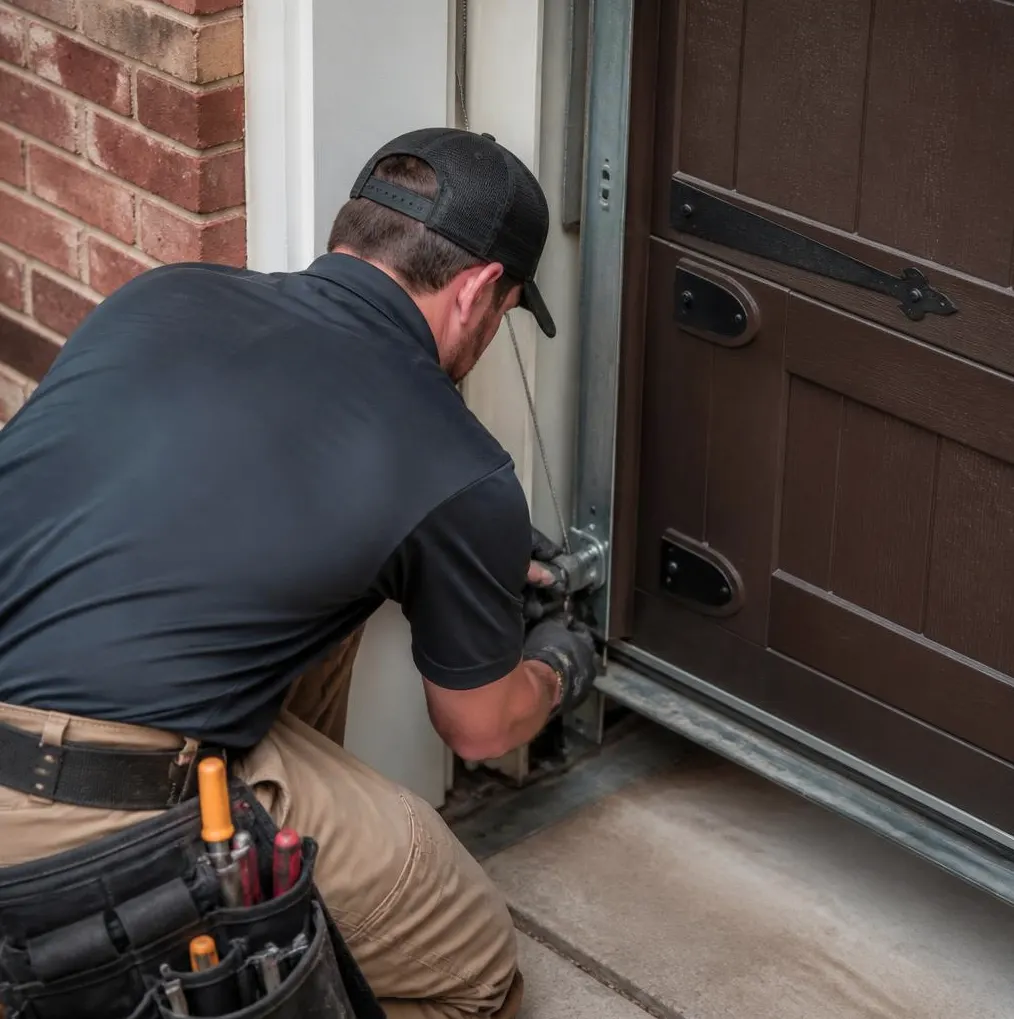
Steel springs contract in low temperatures and can lose some lift capacity, which is why a door that worked fine in October suddenly feels heavy in January. This shows up as slow, labored lifting even with clear tracks. Checking spring tension and, if needed, replacing a spring that's gone brittle or is already showing rust from humidity swings is not a DIY job: these are under heavy load and genuinely dangerous to adjust without the right tools.
4. Opener Force and Limit Settings
Cold makes the opener's gears and lubricant stiffer, so the motor has to work harder to hit its programmed force and limit settings. If those settings were tuned for warmer weather, the opener may think it's hit an obstruction and reverse early. A tech checks and resets these limits so the opener matches how the door actually moves in winter conditions.
5. Old or Wrong Lubricant on Rollers and Hinges
Thick, old grease on rollers and hinges turns gummy in freezing temperatures instead of staying slick, which adds drag right when the door needs the least resistance. The fix is cleaning old lubricant off and applying a silicone-based lubricant rated for cold weather, applied sparingly to moving parts only, not the track itself.
6. Panel Warping on Older Doors
Last on the list because it's less common, but older wood or steel doors that have gone through repeated humid-summer swelling and winter freeze-thaw can warp slightly, enough to bind against the track or weatherstripping. If everything else checks out clear and the door still drags in the same spot every time, this is usually the culprit, and it points toward a conversation about repair versus replacing an aging door with something built for this climate.
When to Call Kingston Garage Door
If your door is frozen to the slab more than once or twice a season, or if it's sluggish even after the ice clears, it's worth a service call rather than repeated at-home fixes. Kingston Garage Door's Garage Door Maintenance visits catch worn weatherstripping, stiff rollers, and spring tension issues before they turn into a no-start morning. If a spring has already gone, our Spring Replacement service handles it safely with the right tools and tension gauges, no guesswork involved.
Serving Kingston, Plaistow, Newton, East Kingston, Danville, Hampstead, Sandown, and Brentwood, we're the garage door company near NH-125 that shows up when your door won't cooperate with a New Hampshire winter. Call Kingston Garage Door today to get your door moving smoothly before the next freeze.